The Best Voice AI Agents for Indian Languages in 2026: A Comprehensive Guide
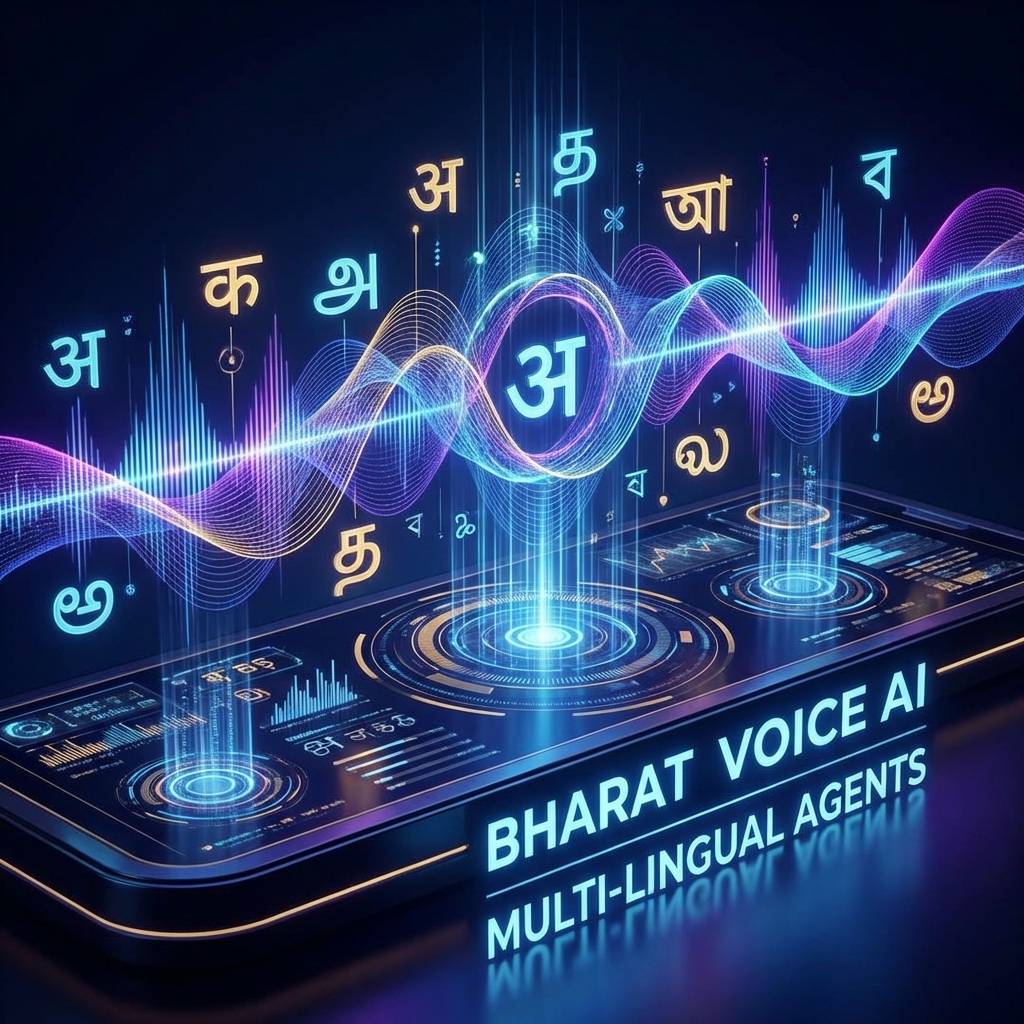
By 2026, the digital divide in India has effectively been bridged, not by screens, but by voice. The 'Bharat' user, once sidelined by English-centric interfaces, is now the primary driver of India's $1 trillion digital economy.
The challenge for businesses has always been India’s staggering linguistic complexity. With 22 official languages and over 19,500 dialects, a generic AI strategy is a recipe for failure. However, 2026 marks the year where Voice AI has finally achieved "Native Fluency"—the ability to understand not just words, but the cultural context, emotion, and regional nuances that define Indian communication.
🇮🇳 The State of Voice in 2026
- 90% — Preference for regional languages over English among new users.
- 300% — Increase in voice-driven transactions since 2024.
- 18+ — Indian languages supported with near-human accuracy.
- < 200ms — Average latency for real-time voice response.
The "Native Fluency" Standard: What Defines the Best Agents?
In 2026, the bar for Voice AI has shifted from "can it speak?" to "does it understand?". The leading agents are now measured against several critical benchmarks tailored to the Indian context:
1. Seamless Code-Switching (Hinglish/Tanglish)
Modern Indians don't speak in pure languages. They fluidly mix Hindi and English, or Tamil and English. The best agents in 2026 handle this "Code-Switching" naturally, without pausing to re-process the language shift.
2. Emotional Intelligence (EQ) in Dialects
Detecting sarcasm in Marathi or frustration in Bengali requires complex neural models trained on local phonetic patterns. Top agents can now adjust their tone in real-time based on the user's emotional state.
3. Edge Computing & Low Latency
For users in Tier-3 towns with intermittent connectivity, the best agents leverage edge AI to process critical logic locally, ensuring the conversation flows without the dreaded "buffering" silence.
Top 5 Voice AI Agents for India in 2026
1. CarmaOne Voice AI (The Collections & Finance Specialist)
CarmaOne continues to define the "Native Fluency" standard in 2026. By focusing exclusively on the financial services sector, CarmaOne has mastered the high-stakes psychology required for debt recovery, lead qualification, and credit verification.
- The USP: Its 'Contextual Dialect Engine' maps a borrower's pin code to their likely regional dialect. If someone in Kanpur says "paisa ka jugaad," the agent understands the exact urgency and cultural weight, responding with appropriate empathy.
- Best For: Banks, NBFCs, and fintechs requiring regulatory-compliant, high-conversion calling.
2. Skit.ai (The Contact Center Modernizer)
A pioneer in the space, Skit.ai has perfected automated voice interactions for large-scale contact centers. In 2026, their platform is a global benchmark for handling complex, multilingual customer journeys over voice.
- The USP: Digital Voice Agents that use 'Hyper-Real’ prosody—practically indistinguishable from human speech—designed to handle millions of concurrent calls with zero latency.
- Best For: Insurance, Telecom, and high-frequency customer support automation.
3. Gnani.ai (The Vernacular Precision Engine)
Gnani.ai is the technical powerhouse for Indic language processing. Their 2026 fleet of 'Vernacular Voice Bots' is preferred by enterprises that operate in deep Tier-2 and Tier-3 markets where dialect precision is everything.
- The USP: Superior Speech-to-Text (STT) and Text-to-Speech (TTS) for over 12 Indian languages, featuring a robust 'Code-Switching' framework that handles Hinglish and other mixed languages natively.
- Best For: Automotive, Healthcare, and tech platforms with a heavy regional user base.
4. Bolna.ai (The Orchestration Platform)
As a dedicated Voice AI orchestration platform, Bolna.ai has gained massive traction by 2026. They provide the "brains" for voice agents that can handle everything from recruitment screening to outbound sales in various Indian vernaculars.
- The USP: A complete 'Voice OS' that allows developers to design complex conversational workflows that integrate deeply with enterprise CRM and telephony stacks.
- Best For: Fast-growing startups and agencies building custom voice experiences.
5. Bland.ai (The Hyper-Scale Outbound Engine)
Bland has pioneered the concept of hyper-scale outbound infrastructure. By 2026, their platform allows enterprises to deploy thousands of concurrent AI sales agents that qualify leads, follow up on pipelines, and drive conversions with human-level persistence across the Bharat market.
- The USP: 'Persistence-Tuned' Voice Agents capable of million-scale concurrent dialing while maintaining high-quality conversational depth and context-awareness.
- Best For: High-volume EdTech, Fintech, and Real Estate sales teams looking for infinite scalability.
Technical Deep Dive: The Engines Powering 2026
The leap in 2026 is driven by three technological pillars:
IndicLLMs
Large Language Models trained natively on Indic text/speech corpora, moving away from English-first translation models.
ASR 2.0
Automatic Speech Recognition that ignores background noise common in Indian environments (traffic, wind, crowded markets).
Zero-Shot TTS
Text-to-Speech that can adapt its accent to a new speaker after hearing only 5 seconds of their voice.
The Regulatory Landscape: DPDP Act and Ethics
Deploying Voice AI in 2026 requires more than just tech; it requires compliance. The Digital Personal Data Protection (DPDP) Act of 2023 has fully matured by 2026, meaning agents must:
- Provide clear voice-based "Notice and Consent" in the user's language.
- Ensure data is processed within Indian borders (Data Residency).
- Implement "Withdrawal of Consent" via a simple voice command.
ROI: The Business Case for Multilingual Voice
Enterprises switching to 2026-gen Voice AI are seeing transformative metrics:
| Metric | Manual Call Centers | 2026 Voice AI |
|---|---|---|
| Cost per Connect | ₹15 - ₹25 | ₹5 - ₹7 |
| PTP (Promise to Pay) | 40% | 65% (via native dialect use) |
| Scalability | 60 Days to hire/train | Instant (via API) |
Looking Beyond: 2027 and the Age of Hyper-Personalization
As we look toward 2027, the trend is moving toward "Permanent AI Companions"—agents that stay with a user across different brand interactions, remembering their preferences, debt history, and linguistic comfort levels. This long-term relationship building is the ultimate frontier for customer experience in India.
Don't Get Left Behind
Join 50+ enterprise leaders building the future of Bharat-ready voice experiences.